

Introduction
Maintaining food safety in production and sterile environments is a complex challenge as facility managers often struggle with microbial growth in hard-to-clean areas, unexpected contamination events that disrupt production, and cross-contamination risks between preparation, processing, and storage zones. Flooring that deteriorates under frequent cleaning or becomes slippery and unsafe further complicates contamination management. While much attention is often given to air filtration, staff hygiene, and equipment sterilisation, one critical factor is frequently overlooked: the floor beneath your feet.
Food facility and cleanroom flooring play a silent but essential role in preventing contamination. As the first surface to interact with foot traffic, equipment, spills, and debris, flooring can either be a pathway for pathogens or a frontline defence. This is where seamless, non-porous, and easy-to-clean surfaces act as both a physical barrier and a facilitator of rigorous cleaning protocols, helping to minimise microbial growth and maintain regulatory compliance. Understanding how flooring contributes to contamination control is, therefore, critical for designing safe and hygienic environments.
With this in mind, this guide explores the ways contaminants spread through flooring, highlights key flooring features that actively reduce microbial risk, and examines how to select materials for different activity zones. By following these best practices, facility managers can leverage flooring as a foundational element of contamination control, creating safer, cleaner, and more compliant food and sterile environments.
Key Takeaways
- Flooring is a frontline defence in contamination control – Seamless, durable, and chemically resistant floors prevent microbial spread, support cleaning protocols, and reduce cross-contamination in food production and sterile environments.
- Zone-specific flooring selection is essential – Matching flooring materials and features to activity areas, traffic flow, and environmental conditions ensures hygiene is maintained effectively across processing, preparation, storage, and high-traffic zones.
- Lifecycle planning strengthens long-term hygiene – Choosing resilient materials, minimising maintenance downtime, ensuring cleaning compatibility, and allowing for scalable upgrades helps facilities sustain consistent contamination management and operational efficiency over time.
The Hidden Pathways of Contamination
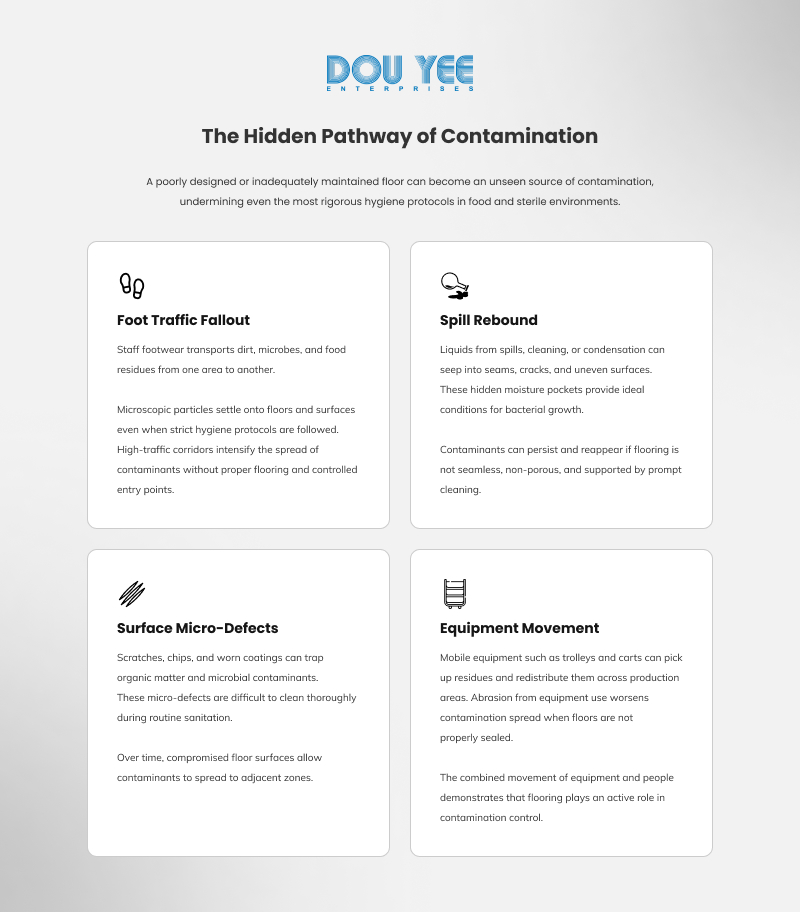
Now that we’ve established the critical role flooring plays, let’s first explore how contaminants travel across surfaces and compromise hygiene in food and sterile environments. When flooring is poorly designed or inadequately maintained, it can become an unseen source of contamination, compromising even the most rigorous cleaning protocols.
1. Foot Traffic Fallout
Staff shoes and boots carry dirt, microbes, and food residues from one area to another, including high-risk processing or preparation zones. Even with strict hygiene protocols, microscopic particles settle on floors and surfaces, creating opportunities for microbial growth. In high-traffic corridors, this effect is magnified, making proper flooring combined with controlled foot traffic and entryway sanitation essential for effective contamination control.
2. Spill Rebound
Liquids from cleaning, accidental spills, or condensation can accumulate in seams, micro-cracks, or uneven surfaces, forming breeding grounds for bacteria. These moisture pockets often go unnoticed, allowing pathogens to persist despite routine cleaning. Without seamless, non-porous flooring and prompt cleaning procedures, these areas can continuously reintroduce contaminants, weakening the overall cleaning efforts.
3. Surface Micro-Defects
Scratches, chips, or worn coatings can trap organic matter and microbes, creating micro-pockets that are difficult to clean thoroughly. Over time, these imperfections compromise the integrity of the floor, allowing contaminants to spread across adjacent zones and reducing the effectiveness of standard hygiene protocols.
4. Equipment Movement
Trolleys, carts, and other mobile equipment can pick up residues and spread them throughout production areas, particularly if floors are not abrasion-resistant or properly sealed. Combined with foot traffic, spills, and surface defects, this illustrates why flooring is not merely a passive surface but a critical component of robust contamination control in food and sterile environments.
By understanding these hidden pathways, facility managers can make informed decisions on flooring materials, cleaning routines, and operational protocols, ensuring consistent hygiene compliance.
Flooring Features That Actively Prevent Contamination
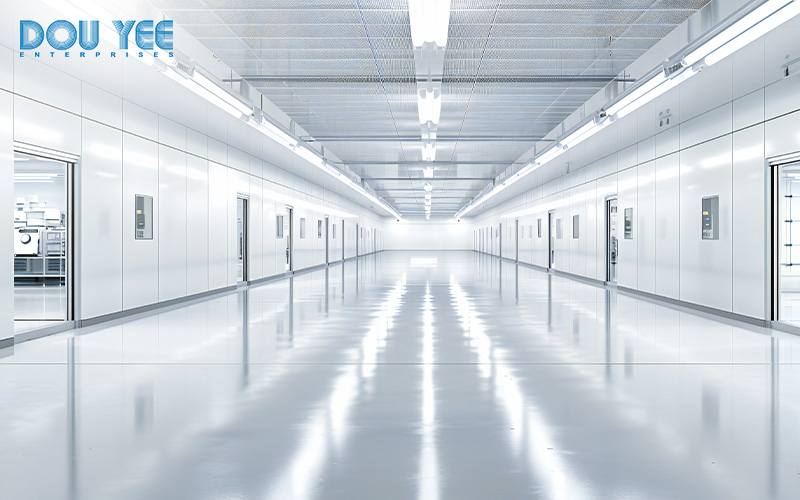
Having examined how contaminants travel across floors and compromise hygiene, next comes understanding flooring features that actively prevent contamination and support robust control in food and sterile environments. Selecting the right materials and finishes ensures that floors do more than just support equipment; they become an active barrier against microbial spread.
1. Seamless, Non-Porous Surfaces
Seamless, non-porous flooring is one of the most effective ways to prevent bacteria, liquids, and residues from penetrating the surface. By eliminating joints, seams, and cracks where pathogens can hide, these surfaces make cleaning more effective and minimise hidden contamination risks. This foundational feature is critical for any facility seeking to maintain stringent contamination control standards.
2. Chemical Resistance
Food and cleanroom environments require frequent disinfection with strong cleaning agents. Flooring that is chemically resistant withstands repeated exposure to detergents, disinfectants, and sanitising solutions without degrading. By maintaining structural integrity over time, chemically resistant floors ensure ongoing hygiene and help facilities sustain high levels of contamination management without compromise.
3. Slip-Resistance
Wet or greasy conditions are common in food preparation and processing zones. Slip-resistant flooring reduces the risk of accidents that could otherwise spread contaminants through spills or uncontrolled movement. Safe, stable floors not only protect personnel but also enhance overall contamination control by preventing cross-contamination resulting from accidents.
4. Durable, Easy-to-Clean Finishes
Durability and cleanability go hand in hand. Floors that resist abrasion and shedding reduce the generation of dust and particles, while smooth, easy-to-clean finishes enable frequent cleaning cycles without damaging the surface. This combination supports long-term hygiene and reinforces contamination control across all operational areas.
5. Zoned Surface Design
Thoughtful zoning, through colour coding, textures, or visual markers, helps guide foot traffic and cleaning practices, limiting cross-contamination between high-risk and low-risk areas. By visually separating zones, facility managers can enforce targeted cleaning protocols and operational routines, further strengthening contamination control across the facility.
With these features integrated into flooring selection and design, facilities can turn floors from potential contamination pathways into proactive tools for maintaining hygiene, protecting products, and supporting regulatory compliance in all high-risk zones.
Matching Flooring to Activity Zones and Traffic Flow

Effective flooring goes beyond material choice; it must be strategically matched to the unique demands of each area in your facility. Every zone, from processing lines to high-traffic corridors, carries different hygiene pressures, equipment loads, and movement patterns. By aligning flooring performance with these operational realities, you reinforce contamination management at every stage and ensure a cleaner, safer working environment.
1. Processing Areas
Processing zones are typically the most demanding areas in a food production or sterile environment. Floors in these areas must withstand chemical exposure, repeated cleaning, heavy equipment, and frequent spills. Smooth, durable, and non-porous surfaces are essential to minimise microbial adhesion and facilitate rigorous cleaning routines. By choosing flooring designed to endure these stresses, facilities can maintain high standards of contamination control and prevent pathogens from migrating into critical production zones.
2. Preparation Zones
Preparation zones require flooring that combines hygiene, safety, and ease of maintenance. Slip-resistant surfaces are critical to prevent accidents in areas where liquids, oils, or food residues are common. Easy-to-clean finishes reduce the risk of microbial accumulation and cross-contamination, supporting effective contamination control during daily operations. Floors in these areas should also be resistant to frequent cleaning cycles, ensuring longevity without compromising hygiene.
3. Storage and Cold Rooms
Storage and cold rooms present unique challenges, including moisture, condensation, temperature fluctuations, and trolley or pallet traffic. Flooring in these areas must handle these environmental factors without cracking or degrading, as damaged surfaces can become reservoirs for bacteria and compromise contamination control. Seamless, moisture-resistant materials that are easy to sanitise are ideal for maintaining both product integrity and facility hygiene.
4. High-Traffic Corridors
Corridors linking different operational zones experience heavy foot traffic and the movement of carts or equipment. Durable, abrasion-resistant flooring prevents wear that could create micro-defects, which otherwise allow contaminants to accumulate. Maintaining clean, robust surfaces in these areas reduces particle transfer between zones and supports facility-wide contamination control.
By carefully matching flooring to the activity and traffic of each zone, facility managers can enhance hygiene protocols, reduce cross-contamination risks, and extend the lifespan of flooring materials. Thoughtful zoning and material selection form the foundation of a flooring strategy that actively supports both operational efficiency and long-term contamination control throughout the facility.
Lifecycle Planning and Operational Reality

Lastly, even the best-designed flooring system can only deliver reliable hygiene if it performs consistently over its entire lifespan. Long-term planning is often overlooked, yet it’s extremely important in sustaining effective contamination control. So, here’s how facilities can safeguard hygiene standards well into the future.
1. Material Longevity
Flooring in sterile rooms and food production spaces must hold up against harsh sanitisers, temperature variations, rolling loads, and constant foot traffic. Selecting high-performance materials ensures the surface remains intact, smooth, and resistant to microbial intrusion. When floors retain their structural integrity over the years, they contribute directly to dependable contamination control.
2. Maintenance Downtime
Floor failures often lead to production stoppages, repairs, and temporary hygiene vulnerabilities. Every patch, crack, or resurfacing attempt creates a window where contaminants can enter controlled areas. Minimising unplanned downtime is therefore essential in any contamination management plan. Durable flooring reduces repair frequency and helps maintain uninterrupted operations.
3. Cleaning Compatibility
Daily and deep-clean cycles demand flooring that can withstand aggressive chemicals and high-pressure washing. Materials that degrade or lose their protective coatings compromise hygiene outcomes and cleaning efficiency. Ensuring compatibility between flooring and your sanitation protocols helps maintain consistent performance and supports ongoing contamination control.
4. Scalability and Retrofitting
Facilities rarely stay static. As workflows expand or layouts shift, flooring systems should allow seamless extensions without creating joints, uneven patches, or areas prone to trapping debris. Choosing solutions that can be scaled or retrofitted cleanly ensures upgrades don’t introduce new contamination points and preserves hygiene standards through operational growth.
In summary, effective lifecycle planning ensures that flooring continues to support hygiene and safety over the long term. By prioritising these factors, facilities can maintain consistent contamination control and protect both products and personnel throughout the life of the flooring system.
Frequently Asked Questions
1. Why is flooring critical for contamination control in food production?
Floors can harbour bacteria, food residues, and spills that spread contaminants between zones. Seamless, non-porous flooring reduces microbial growth and supports effective cleaning, keeping food products safe.
2. Which flooring types are best for areas handling raw or wet food?
Areas processing raw or wet food require slip-resistant, chemical-resistant, and seamless surfaces like polyurethane, epoxy, or vinyl. These floors reduce cross-contamination and withstand frequent washing and sanitising.
3. How does foot traffic contribute to food contamination?
Staff shoes and boots carry dirt, microbes, and residues from other areas. High-traffic zones like preparation areas or corridors need durable, easy-to-clean flooring to minimise contamination transfer.
4. Can flooring help prevent allergens or cross-contact contamination?
Yes. Smooth, sealed flooring prevents particles, liquids, and residues from lodging in cracks or seams. Combined with proper cleaning, this reduces cross-contact risks, including allergens, ensuring food safety.
Conclusion
Beyond its functional purpose, flooring serves as a key element in maintaining rigorous contamination management within food production and sterile facilities. From preventing the hidden spread of microbes via foot traffic, spills, and equipment movement, to supporting cleaning protocols through seamless, durable, and chemically resistant materials, the right flooring forms a frontline defence against contamination. Tailoring flooring to specific activity zones, planning for traffic patterns, and considering lifecycle performance ensures hygiene standards are consistently maintained, while reducing downtime, maintenance costs, and cross-contamination risks.
By combining thoughtful flooring design with operational strategies, cleanroom monitoring systems, and proactive maintenance, facilities can create a safer, cleaner, and more compliant environment that protects both products and personnel.
So, for food and sterile facility managers seeking expert guidance on selecting and maintaining flooring systems that maximise contamination control, Dou Yee provides comprehensive solutions tailored to your operational needs. Contact Dou Yee today to ensure your facility’s flooring supports long-term hygiene, safety, and compliance.